
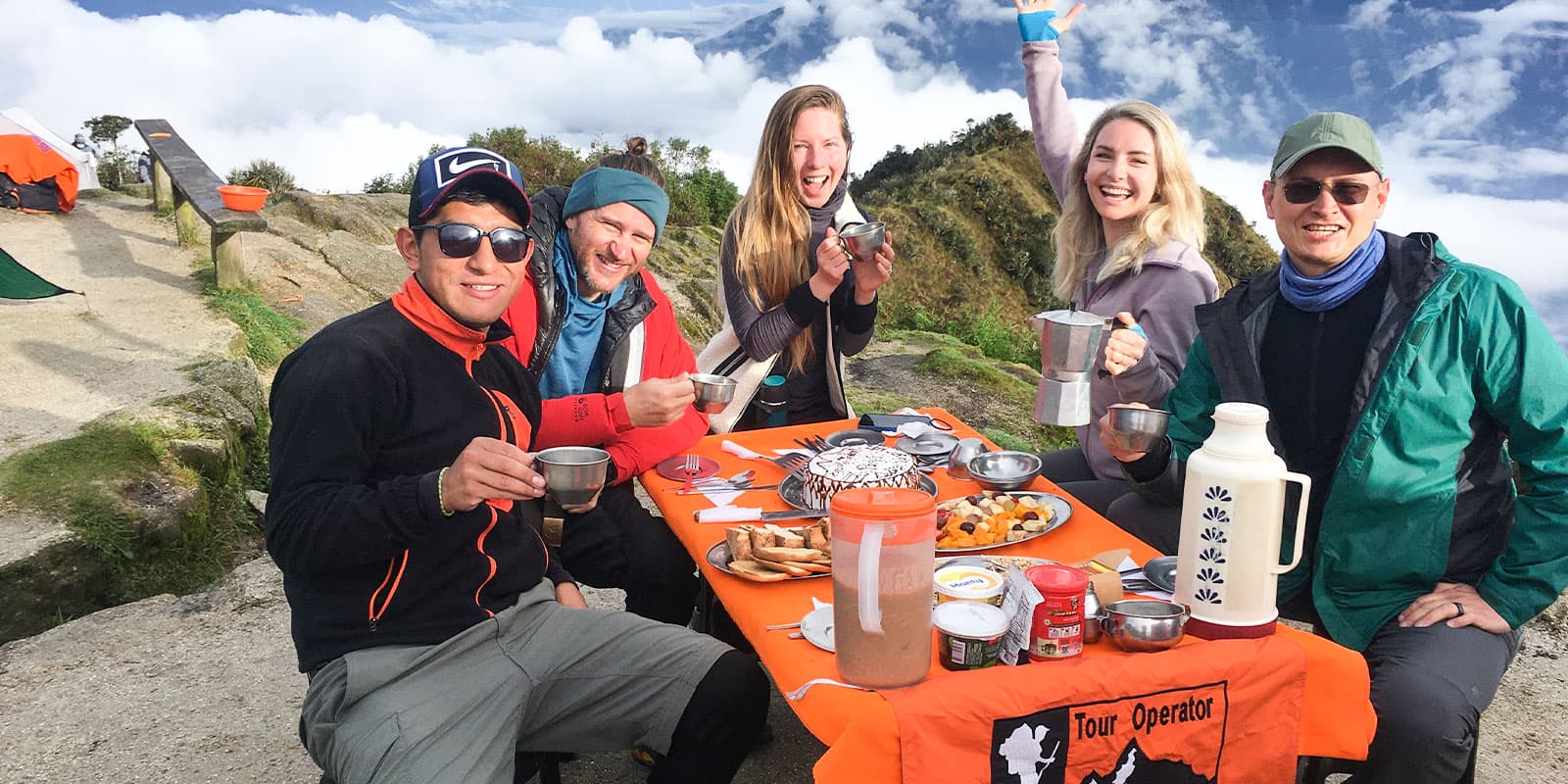
Important things to know for hiking the 4-day Inca Trail to Machu Picchu
How do you prepare for the Inca trail?
The biggest challenge with Classic Inca trail is the steps. You will be climbing and descending over 10 000 steps. Climbing steps puts a lot of pressure on your legs and going down puts even more pressure on the knees. Below we look at all the different challenges you will encounter and the best way to get ahead of those challenges.
Acclimatization to the altitude:
High altitude starts to have an effect on our bodies from between 1,500m – 2,000m (4921ft – 6561ft) when our bodies start to react differently to make up for the changes in oxygen levels. As you get higher, the air gets thinner, so with every breath there is less oxygen for your body. Your body gradually adapts to getting less oxygen – you breathe faster and deeper and the body produces more red blood cells. This takes time so this is why if you go from low to high altitude too quickly, you may feel symptoms of altitude sickness until your body acclimatizes.
The Cusco region is at very high elevations. The city of Cusco stands at a staggering 3 399m/ 11 152ft. On the other hand, the classic Inca Trail has varying degrees of elevations, lowest is your starting point (thrailhead:km82) at 2 729m/8 923 and gets as high as 4 200m/13 779ft (Dead Women´s Pass). So, altitudes sickness is to be expected when hiking the classic Inca Trail. However, people react differently to altitude sickness and it can present itself in a variety of symptoms. Common symptoms include: headache, nausea, vomiting, fatigue, poor appetite, dizziness and disturbed sleep and in extreme cases, loss of oxygen.
There are number of ways to deal with altitude sickness. Firstly, you need to acclimate, by spending a few days in Cusco or the Sacred Valley. The body does adjust to the thin air, it just needs time. There are a number of day tours you can participate in before your hike, that don’t require much exertion. Secondly, get lots of sleep, relax and take it easy. Another option is to watch what you consume, try to avoid alcohol and drugs and also drink lots of water and coca tea. Keep your meals light, high in calories with lots of carbs. Lastly, we recommend visiting your doctor before traveling to Peru and ask for recommendations for medication that can help with altitude sickness.
These are the recommended remedies for altitude sickness is WATER, COCA TEA and OXYGEN, IF NEEDED.
Get in shape:
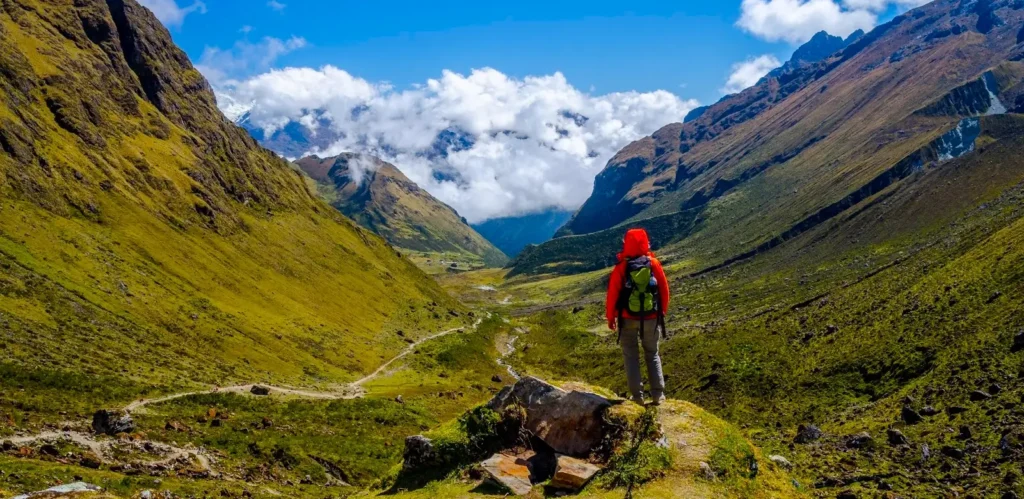
The Classic Inca Trail is not easy. It has over 10 000 steps and a few sharp inclines. Being physically fit will certainly help you to enjoy everything this famous trail has to offer. You do not have to be an athlete, but we do recommend that you are active and build endurance. There are a few ways to achieve this. You could join a health club a couple of months leading to the trek. Another option is to participate in an aerobic group activity, aerobics are known for increasing endurance. If you prefer the outdoors, walking or running for 15kms/9 miles day would suffice.
Book in advance:
The Classic Inca Trail to Machu Picchu in Peru is one of the world’s most famous hiking trails, bringing in hundreds of visitors from around the world on a daily basis. With more than 200 licensed Inca Trail tour operators guiding visitors through this trek and only 500 Inca Trail permits being issued on any given day, it’s recommended to get your dates to our tour reservation team early to avoid any disappointment.
Now you may be thinking 500 permits per day seems like plenty. However, when you factor in the guides, porters, and other trekking staff for each group, only about 200 of these permits are left for tourists.
Alternative treks can provide opportunities for last-minute hikes to Machu Picchu, trekking along the classic Inca Trail – be it for four or five days or more – definitely requires advance reservations. If you arrive in Cusco hoping to find space on the Classic trail, there’s a very good chance you’ll be waiting a few weeks or months for an opening depending on the season. You may be able to get the short Inca Trail, however it only covers the last one third of the Inca Trail.
How early do I need to book the Classic Inca trail?
Ideally, you should try to book the Inca Trail about six months or more in advance, especially if you want to go during high season (April through September). During these months, trail permits are in high demand. Permits for the 2024 season have been on sale since the 1st of October 2023. Many popular dates sell out in just hours. All of the agencies that purchase tickets have their advanced bookings ready to book the moment the tickets go on sale.
The months after high season also tend to sell out ahead of time. If you want to hike the Inca Trail in October through December, we’d recommend you book at least three or four months in advance. If you want to hike it during the Christmas holidays you may need to book even earlier. During the rainy season, January and March, you might be alright booking as little as three to five weeks in advance. However, if you’re wondering what happened to February, that’s the month during which the Inca Trail closes for maintenance. Machu Picchu itself does not close.
According to Orange Nation Peru, one of our recommended Inca Trail tour operators, Inca Trail permits seem to sell out earlier each year. With that in mind, try to book six months in advance – for whatever time of the year – it´s the best way to avoid disappointment.
Making the Inca Trail Reservation?
You can check the availability of permits for the dates you are interested in hiking the trail through a tourist company in Peru that is a licensed Inca Trail operator. No one except licensed Inca Trail operators can purchase Inca Trail permits. Inca Trail tour operators and intermediaries also have calendars showing availability. If you book with a licensed tour agency, they will tell you whether they have permits for the trek and usually the permit is included in the price of the tour.
If you do manage to find availability for your chosen date, the tour agency will request a deposit upon making your reservation and this is non-refundable. Government regulations state that all permits are non-refundable and non-transferrable. Thus, no changes can be made. If you change your dates, you have to pay for another permit.
Permits went on sale on the 1st of October of this year. You will need to provide a deposit which is fully refundable if the tour company cannot purchase your permits. Literally on October 1st, there is a mad rush by all companies that provide the Classic Inca Trail of 4 or 5 days to purchase the desired dates of their trekkers. Many highly desired dates are sold out in minutes.
If you’re ready to start looking for a tour operator that’s right for you, read our guide on Choosing & Pricing an Inca Trail company. Also, be sure to review the Top Rated Classic Inca Trail operators.
Is there an age limit?
The Peruvian government has not set any guidelines regarding age limits. The Inca Trail is welcoming to minors, that is made apparent by the different discounts that have been set up for different age groups from the age of 2, all the way to 18.
Most importantly, you need remind yourself that the point of this hike to not to prove how athletic you are. So, you obviously no Hussain Bolt, that’s perfect because unfortunately no gold medal is waiting for us at Machu Picchu. The idea behind this hike, is for you to enjoy the landscape, the flora and fauna unique to the Inca Trail, capture the moments in pictures that will last forever, build comradeship with your fellow hikers and finally, explore the Citadel of Machu Picchu, tour every nook and cranny and have a deeper understanding of Ancient Inca culture and modern Peruvian culture.
How much of a hike is the Classic Inca trail?
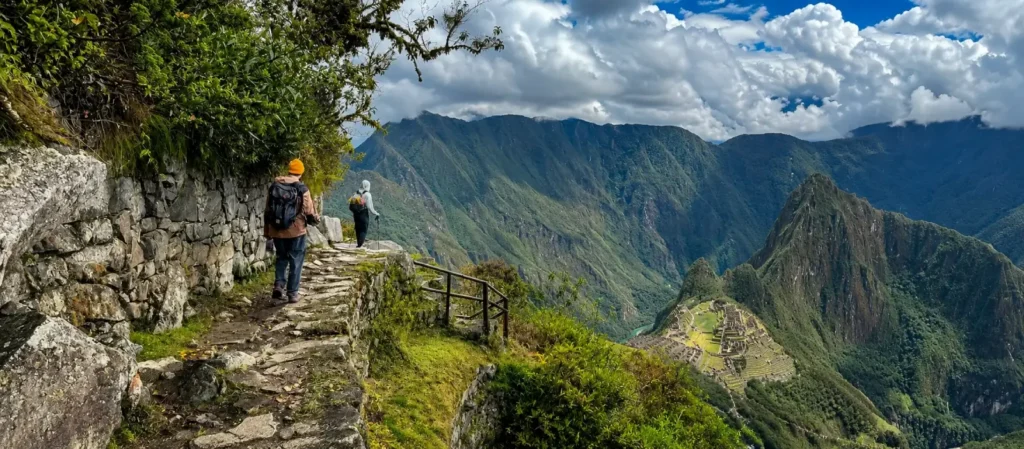
The 4-day Inca Trail is a complete distance of 42.2km/24.4miles through the Andes Mountains. The maximum altitude you will reach is an intimidating 4 217m/ 13 907ft. You also have to navigate over 10 000 Inca steps. On day-2 you have an average of over 9 hours of hiking and you achieve your highest pass on this day. On the other hand, day 4 and day 1 can be considered easy to moderate. When you consider all the factors, the classic Inca Trail is regarded as a moderate to difficult hike. However, if you prepare sufficiently the trail could be an enjoyable experience with minimal effort. Here is a short synopsis of each day:
Day 1
- On day 1 you gain just 80m in elevation, climbing for around 6 hours, for a total of 12km/7.5m. This day is relatively easy, a warm up along the rolling Inca terrain.
Day 2
- The most challenging day of the 4-day Inca Trail is by far the second day. Hiking for about 9 hours depending on your pace, for a gain of 1 200m in elevation. After reaching the highest point you descend for 650m before embarking on yet another steep climb to reach your second highest pass of the trek at 4 000m/13 123ft, followed by a descent to your campsite. This day is difficult, but it will give you a real sense of achievement. You will cover a total distance of 16km/10m.
Day 3
- The most visually impressive day, has to be day 3. The views of the mountains, canyons and surrounding areas are spectacular. You do however have to descend over 3 000 steps, which can be tough on the knees. Most of this day´s hike is downhill covering a distance of 10km.
Day 4
- This is D day, the day you have been waiting for. This incredible day is all about Machu Picchu. It’s only a short hike of only 6km. Be prepared for the most enigmatic sites on this day. Starting with the ageless Inca site of Wiñay Wayna, to the magical Sun gate, that will provide you of the most panoramic views of the Citadel and the landscape that surrounds it. Finally, the great and majestic Citadel of Machu Picchu. Day 4 is an easy hike, with jaw dropping sites and views.
TREKKING TOURS:
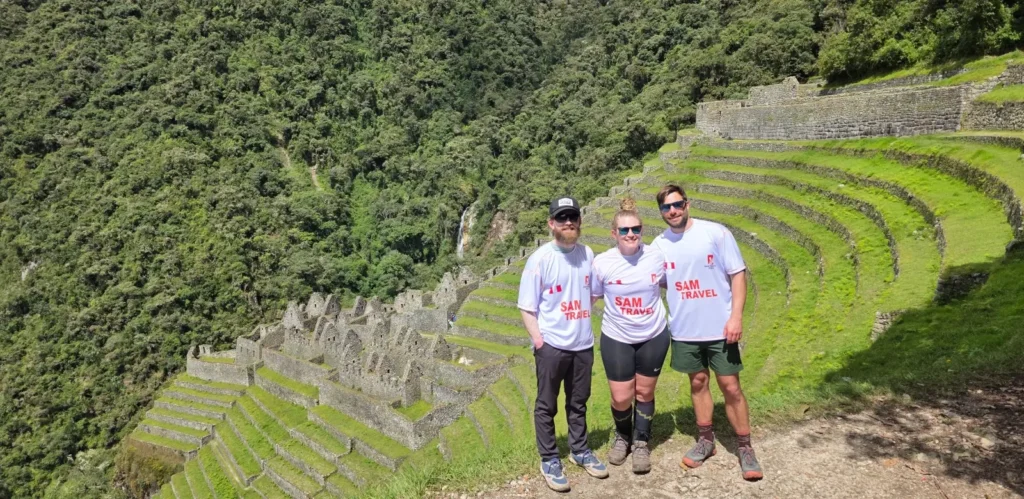 04 Days
Luxury Inca Trail to Machu Picchu 4D/3N
Walk in the footsteps of the Inca to the fabled Machu Picchu! The Classic Inca Trail to Machu Picchu is one of the world’s ten best hikes, unparalle…
From $2577 per person
Explore this Trip 9 Days
Luxury Glamping Inca Trail Package 9 days
Every activity you have ever dreamed of doing in the famous City and Region of Cusco Peru is included in this complete tour. It’s an all-in-one glam…
From $3777 per person
Explore this TripWhat if I have medical conditions?
The classic Inca Trial is not easy. We do recommend that you are in good mental and physical condition. Important: Your guide will be first aid trained and has a fully stocked first aid kit with him, however for legal reasons, they cannot give you any medication for consumption. They are not trained doctors and therefore cannot take that upon themself. It is in your best interest to bring your medication. Consider any chronic illness you might suffer from, altitude sickness or diarrhea. You need to bring your own medication.
During your Inca Trial hike, you will have occasions where the altitude, the steep climbs and multiple days of walking become overwhelming and have you thinking of just giving up. In such instances, you will need to pull into your inner strength and push your limits. Mental strength is definitely necessary to get your through the more challenging days in the Andes.
On the other hand, if you suffer from any of the following conditions: chronic illness like diabetes, circulatory disease like high blood pressure, respiratory problem (e.g., asthma) or heart issues, we recommend consulting your doctor before partaking on this trek. Ensure that your doctor gives you the green light and you are carrying all the necessary medication. Next, securing a good travel insurance provider is absolutely essential. If you suffer from any health issue while tracking, an airlift to the nearest hospital can be arranged in extreme cases or you could be transported to the nearest town for medical assistance. It is very important to note that this will all be at your own expense. This is why travel insurance is such an essential part of booking a multiple day trekking adventure.
There are other medical conditions that can incurred after your arrival in Cusco or Peru. The most obvious is Altitude sickness. There are many ways to treat this of course. Click on the following link for more information: Altitude sickness. Another unfortunate condition you could encounter is Diarrhea. There are many different reasons as to why this could happen. Sometimes the way food is prepared doesn’t necessary gel with your sensitive stomach. Or you mistakenly swallow tap water while brushing your teeth. No matter the cause, we recommend staying hydrated and rest assured that it will go away in a few days.
Is there an age limit?
The Peruvian government has not set any guidelines regarding age limits. The Inca Trail is welcoming to minors, that is made apparent by the different discounts that have been set up for different age groups from the age of 2, all the way to 18.
The best way to view age in terms of Inca Trail to Machu Picchu is that ¨age is just a number¨. People from the ages of 50 and above with little trekking experience along the Inca Trail often do well, as long as they prepare beforehand and choose a reputable company like Glamping Peru Treks that has experience with older trekkers and will also allow them to go at a considered pace, then you have nothing to worry about. Exhaustion can sometimes only be overcome by pure mental strength and that does not have anything to do with age, it solely depends on the individual. The Classic Inca Trail can also be viewed as an exciting and challenging family adventure. If a minor is active, enjoys the great doors and adventure, then you would be doing them a disservice leaving them out of this once in a life time opportunity.
The idea behind this hike, is for you to enjoy the landscape, the flora and fauna unique to the Inca Trail, capture the moments in pictures that will last forever, build comradeship with your fellow hikers and finally, explore the Citadel of Machu Picchu, tour every nook and cranny and have a deeper understanding of Ancient Inca culture and modern Peruvian culture.
What to pack on the Classic Inca Trail?
During the Inca Trail Trek to Machu Picchu, your main luggage can be stored at our office in Cusco or at your Cusco hotel. You will receive a small duffel bag at your briefing in which you can pack your clothes and sleeping bag for 3-4 days. Your team of porters or horses (depending on which trek you are on) will carry these bags together with the food and equipment for the trek. Please note: you will not have access to these items until the end of each day as the porters or pack horses will always be ahead of the group. Please plan to carry your day backpack containing your personal belongings such as your camera, water and sunscreen, etc. By Peruvian law, a duffel bag must not weigh more than 7 kilograms (15lbs). This limit is set to protect the health of the porters or horses. All bags will be weighed before being accepted. If you require more than 7 kilograms, it will then be your responsibility to carry the extra weight with your day pack. In these 7 kilos, please count 2 kilos for your sleeping bag and 1 kilo for your sleeping pad. This leaves you about 4 kilos for your personal gear.
- PASSPORT: You MUST take your original passport; a photocopy is not acceptable. (Keep it in a plastic bag, in case of rain).
- SLEEPING BAGS: You will need a good warm sleeping bag for the Inca Trail trek. We that recommend you bring your own sleeping bag. However, you can rent one from Glamping Peru Treks for $20 USD per person, that is guaranteed to be warm and professionally cleaned. If you are planning to purchase a sleeping bag, it is a good idea to purchase a four season (or -10 C) sleeping bag during the winter months. For other months, you will probably be fine in a 3 season (or -4/-5 C) sleeping bag, although this depends on how much you feel the cold and is given as a guideline only.
- INFLATABLE MATTRESSES: It is recommended to have an inflatable mattress for comfort but not required. Glamping Peru Treks foam mattresses are included within the package price. If you would like to rent an inflatable high quality Therma rest mattress, we have them available to rent for $20 USD per person. If you rent the air mattress, you still get the foam mattress to put under it.
- WALKING POLES: It is highly recommended that you have walking poles for your trek. Glamping Peru Treks has professional extendable poles available to rent for $15 USD a pair, per person.
- WATERPROOF, WELL WORN IN WALKING BOOTS: Good quality, comfortable footwear is essential. Whatever you wear on your feet, the most important thing is comfort. It is vital to ensure your boots are well worn in and lightweight. Ankle support and waterproofing is recommended but if you already have something comfortable with good grip, then don’t go rushing out to buy new boots – you are better off with your well-worn in pair!
- WATERPROOF CLOTHING: A plastic poncho is recommended. Some trekkers also like to bring waterproof trousers; however, a poncho will be sufficient if it covers your bag, body and most of your legs.
- PLASTIC BAGS: Keep your belongings and clothes dry inside the duffel. Bags are included in your duffel, which you receive during your briefing. We recommend that you wrap everything in plastic because the duffels are not waterproof.
- TOILET PAPER: This is an important item to bring during the trek! Bring small plastic bags for rubbish, which can be thrown in the main rubbish bag provided by the porters at camp.
- SMALL TOWEL AND BASIC PERSONAL TOILETRIES: There are showers available at the campsite on the third night. Bring travel size shampoo and shower gel, if you would like to use it, plus wet wipes for the rest of the trek.
- WATER BOTTLE: Bring one large (1.5 liter) or two or three small reusable water bottles that can be refilled on the trail with boiled water, which will be supplied, when possible, usually after meal times. Please do not bring disposable bottles!
- WARM CLOTHING FOR THE NIGHT TIME: Fleece, long pants, woolen hat, gloves.
- THERMAL UNDERWEAR: If trekking in winter or if you tend to get cold easily.
- WALKING CLOTHING – YOU NEED TO LAYER UP: e.g., zip off trousers, fleece, T-shirts.
- PERSONAL MEDICATION AND BASIC FIRST AID KIT: Band aids, blister kit, Imodium, Panadol, rehydration salts, and any other medication prescribed by your doctor.
- CAMERA AND EXTRA BATTERIES, MEMORY CARDS: Please note: there are no electrical outlets on the Inca Trail so make sure you fully charge up/or have spare batteries!
- SNACKS: Chocolates, chips, crackers, granola bars, or energy bars etc. Additional snacks are provided during the trek, but you may like to bring some extras, just in case.
- FLASHLIGHT: This is very important! (And extra batteries)
- FOR THE SUN: Sunscreen, sunglasses and sunhat
- INSECT REPELLENT: Tropical strength
- ANTISEPTIC HAND GEL
- SWIMWEAR FOR AGUAS CALIENTES HOT SPRINGS: Towels can be rented for 5 soles.
- FLIP FLOPS / SANDALS: If you wish to have a shower on the third night.
- EXTRA MONEY: For tips, extra drinks and souvenirs.
Please visit the Inca Trail Trek or Alternative trek to Machu Picchu page for more information about each trek and if you are looking for the Classic Inca Trail to Machu Picchu, visit this page for information on securing Inca Trail Permits.
CAN I GET US DOLLARS OUT OF ATMs IN CUSCO?
Yes, most ATMs in Cusco give you the choice of withdrawing cash in US dollars or Peruvian soles. Banks in Cusco take VISA cards in their ATMs but only a couple banks will accept Mastercard for an extra fee. Depending on which country your card is from, the limit on how many dollars you can withdraw per day may be as low as $200.
Are walking poles allowed on the Classic Inca Trail?
YES. Not only are they allowed, we highly recommend them. Those 10 000 steps are taxing on your knees and the walking poles will bring a welcome relief. Even though they are allowed, they do come with a few restrictions, which we will mention in a bit. If you don’t want to go through the rules and regulations, the simplest way is to hire poles from your tour operator. If you already have your own, please double check that they do not have a metal spike (this causes damages to the trail), your walking poles need to have rubber protection. The poles are solely used while trekking the Inca trail, they are not permitted at all inside Machu Picchu.
What are the campsites like?
Campsites are booked on a first come, first serve bases. There are a few campsites along the Inca Trail, some more popular than others. The most popular spots get booked out first and when you book last minute you will be left with least popular spots. Depending on when you booked and availability, it possible to get a different campsite than the one stated on the itinerary your tour operator provided.
On day one:
Wayllabamba (3 000m/9 842ft) the best and most popular option. At night the temperatures are around 5°C or colder during in dry season. Another option is Ayapata, it sells out very fast because it has very limited space. You also need to be accustomed to the altitude because it is a steep climb on day 1. Mesqay is what you are likely to get if you book last minute.
On day two:
Chaquicocha (3 800m/1 800ft) is the most popular option for day-2. You can also get Pacasmayo. These campsites do have night time guards, so the noise level is always kept to a minimum and they are pretty safe.
On day three:
Day 3 has the best campsites on offer. Wiñay Wayna has 125 square meters of campsite. The facilities include showers with cold water, toilets and a small store that sells water, snacks and beer. Just a stone’s throw away are the ageless ruins of Wiñay Wayna (Quechua word meaning ¨forever young¨), you have plenty of time to enjoy not only a guided tour, but to explore them at your own leisure. Its only 3 miles/ 5 km from Inti Punku (Sun Gate) where you get to be showered with your first full view of the great Machu Picchu Citadel. The government sets this up automatically as first choice, unless you request for a different campsite. Once its full, they then book you into Phuyupatamarca by default.
Phuyupatamarca is the second campsite with ruins of the same name (meaning ¨the city in the clouds¨). It’s a beautiful campsite perched at the top of the mountains at 3 680m/ 12 073ft above sea level, with breathtaking views of the snow-capped Mount Salkantay. It’s further way from Machu Picchu at 13km away and takes about 5 hours to hike there. The ruins on the other hand are definitely worth exploring, they are still intact with an irrigation system that still works. This campsite is peaceful and less crowded.
Whatever campsite you end-up at, they are well taken care of, with night guards and toilet facilities. Toilet facilities are not always clean, so we recommend that you try to find a tour operator that brings its own toilet tent for just your group.
Toilets on the Inca Trail and in the campsites?
There are a number of governments supplied facilities along the trek. However, its important to note that these are not usually the cleanest. It is important to choose a tour operator that will bring their own toilet tent at camp. You also need to bring a roll of toilet paper because it is not supplied along the Trail. Another cultural difference that’s prevalent in a majority of Latin American countries, you cannot throw toilet paper into the toilet bowls because of the plumbing system cannot handle the pressure.
What is the weather like on the Inca Trail?
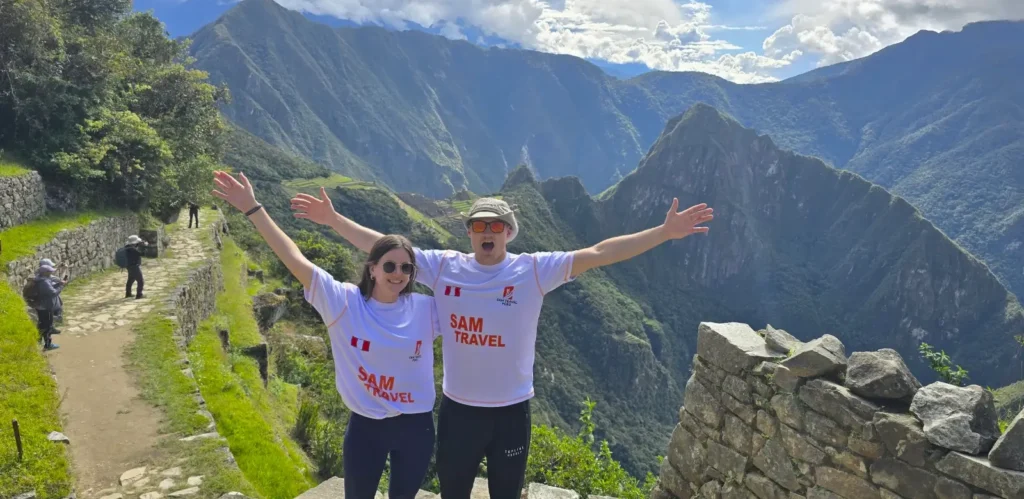
The weather on the Inca Trail is very unpredictable. Firstly, we have to look at the time of the year, weather differs during wet season (November to April) where the rain is frequent and can be intense and dry season (May to October) where the days are sunnier but nights are colder. The trail travels through cold mountainous regions, all the way to sub-tropical heat as you near Machu Picchu and the Amazon Jungle.
Day 1:
- Minimum Temperatures – 4°c. Maximum Temperature – 20°C. Average temperatures – 12°C.
Day 2:
- Is the coldest day of trekking. You climb to very high, reaching the 2 highest passes of the trek on this day. Therefore, you will encounter the lowest temperatures. The weather varies from 0°c to 8°c and camp can get as low as 3°c.
Day 3:
- The weather is usually very pleasant, not too hot and not too cold. Its normally between 10°C and 18°C and the popular Wiñay Wayna campsite is around 13°C at night.
Day 4:
- You trek on the edge of the Amazon Jungle at this point, the weather tends to be humid and can reach highs of 22°c. Rains do frequent this section and during wet season are more frequent and intense.
- To deal with the changing weather patterns, we recommend wearing layers, so can peel them off and on as required. Also carry a poncho and rain jacket in your day backpack for those surprise rain showers.